
A little learning...

“… what a dreadful condition must be that of the poor parents; afraid to live with their child, - but more afraid to die and leave him in the care of strangers.”
(Letter from Samuel G. Howe to Rev. Joshua Leavitt, 5 Apr 1856)
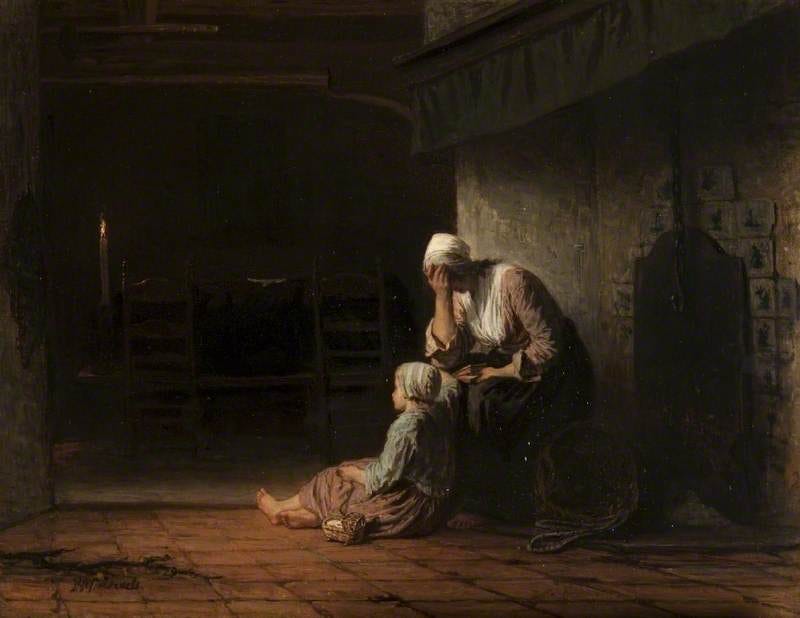
In this letter, Samuel G. Howe, a prominent reformer, described to his friend the Rev. Joshua Leavitt, an instance of idiocy1 he had come across that month. (I’ve written about Samuel Howe before. Howe is not one of my favorite people. Read more on that here.)
An adult son with cognitive disabilities had, during a behavioral outburst, broken his mother’s nose. The parents were, regardless, unwilling to consider committing him for residence elsewhere.
These feelings are just as familiar to today’s parents. In the past, as now, children with intellectual disability grew into teenagers and adults with intellectual disability — wonderful, loved and valued human beings, with their own share of strengths and challenges, gifts and struggles. It can feel like there are no good choices. This thing called life is complicated.
This modern mother expresses the mingled hope, determination, gratitude, and loss, that can be part of the experience:
I’ve been studying the experience of idiocy in New England for some time, and I thought I had a solid sense of the difficulties and rewards that families faced.
I was so very wrong.
It’s been a quiet year on my Substack. I am now caring — alone — for a parent with advancing dementia, while holding a full-time job, maintaining house, home, yard, and combined finances, taking care of a geriatric dog, and keeping the research-and-scholarship ball rolling. And I have, somehow, kept that research rolling (thank goodness for digital records access!) — but the time to write about it? A little (a lot) harder to come by.
I’ve also learned, and am learning, so much about the day-to-day realities of caring for an adult who is wholly reliant on you, who deserves every bit of your care, and, at times, fights back against that same care. I cannot even imagine doing this in a time before wifi cameras, motion sensors, GPS trackers, and smart locks.
Quite a few of you have arrived while I’ve been learning to swim in the deep end of the caregiving pool. Welcome! More posts are coming, I promise.
In the meantime, here are some links to past posts to keep you company.
First, examples of the complexities of caregiving, from neglect to fatal mistakes to one’s loved one going missing:
Musings: Idiocy and Firestarting - to cage, or to risk a fire?
Snapshots: Cruelty to the Helpless - when inability to care becomes neglect.
Memorial Day: Cornelius Garvin (1845-1864) - pressed into the Civil War, leaving a mother looking for her missing son.
Next, a look at care arrangements of the past:
Musings: Boarding at the Poorhouse - was the poorhouse always the last option?
Profiles: Barney Gould (1818-1895) - independent living, free-range style.
Profiles: Robert Bulkeley Emerson (1807-1859) - residential care in the upper classes.
And now, if you’ll excuse me, I have some forty-odd drafts in progress to work on.
As always, I use the term as it was used historically. For more context, visit Why Do This Work.